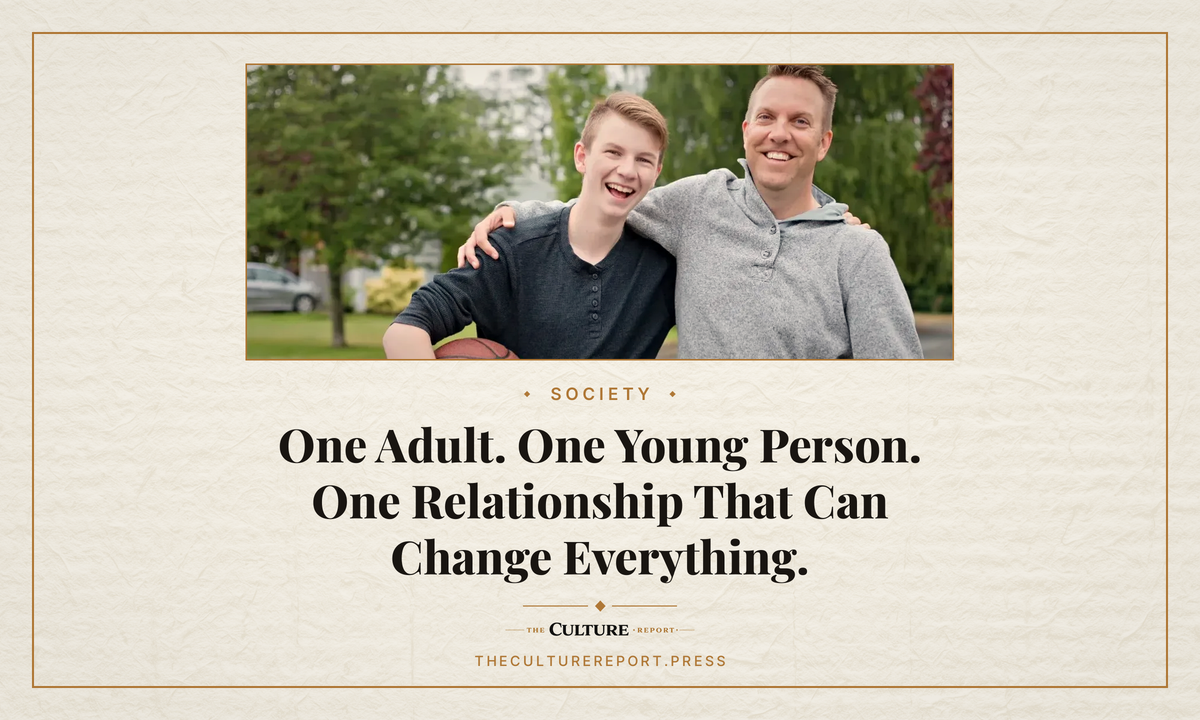
One Adult. One Young Person. One Relationship That Can Change Everything.
Modern Australia asks many young People to grow up with a shrinking village. On the quiet power of one consistent adult through Big Brothers Big Sister Australia.
Why mentoring through Big Brothers Big Sisters Australia may be one of the most effective investments we can make in the next generation.
By Darryn Keneally
There is an old African proverb that says, “It takes a village to raise a child.”
Modern Australia, however, often asks young people to navigate life with a shrinking village. Families are under pressure, schools are stretched, communities are less connected than they once were, and many young people simply lack a trusted adult outside their immediate family.
That is where mentoring becomes transformative.
Across Australia, young people are discovering that one consistent adult relationship can change the direction of their lives. Big Brothers Big Sisters Australia has spent decades demonstrating exactly that.
This is not simply about spending time with a young person. It is about creating belonging, building resilience, developing confidence and helping young people believe their future can be greater than their present circumstances.
The Power of One Relationship
Big Brothers Big Sisters Australia operates on a remarkably simple premise: carefully match a young person with a screened, trained and professionally supported volunteer mentor.
The mentor is not expected to become a counsellor, social worker or teacher. Instead, they become something many young people desperately need: a reliable adult.
Someone who turns up. Someone who listens. Someone who encourages. Someone who believes in them before they believe in themselves.
Research consistently demonstrates that stable developmental relationships can improve social, emotional and educational outcomes for children and adolescents. Quality mentoring has been associated with stronger school engagement, greater self-confidence, improved relationships and better emotional wellbeing.
Evidence That Goes Beyond Good Intentions
Many charities do valuable work, but few can point to a long international history of structured youth mentoring and evidence-based relationship support.
Research into youth mentoring suggests that well-designed programs can produce positive outcomes across academic, social, emotional and behavioural areas. However, the strongest results are generally found where mentoring relationships are well matched, properly supported and sustained over time.
This is important because effective mentoring is not simply about placing two people together. It requires screening, training, safeguarding, professional supervision and ongoing support.
Big Brothers Big Sisters Australia’s approach is built around creating safe and meaningful relationships that can help young people develop confidence, resilience and hope.
Potential benefits of youth mentoring include:
- improved engagement with education
- stronger communication and relationship skills
- increased confidence and self-esteem
- reduced social isolation
- improved emotional wellbeing
- greater connection to community
- stronger aspirations for the future
These outcomes matter not only for individual young people, but also for families, schools and communities.
Prevention Is Better Than Crisis Response
Australia invests heavily in responding to youth disadvantage, including mental health services, youth justice, homelessness, school disengagement, alcohol and drug support, and child protection.
These systems are essential, but Australia must also invest in prevention.
Mentoring can strengthen protective factors before a young person reaches crisis. These protective factors may include positive adult attachment, resilience, emotional regulation, self-worth, community connection and hope for the future.
A mentor cannot solve every problem in a young person’s life. However, a consistent relationship with a trustworthy adult may help a young person feel less alone and more capable of facing challenges.
Sometimes the most powerful intervention is not a program, service or institution. Sometimes it is a person who continues to show up.
More Than Friendship
Big Brothers Big Sisters often describes mentoring through the power of friendship. While that captures the warmth of the relationship, the model involves much more than informal friendship.
Mentors are screened and trained. Young people are carefully matched. Relationships are supported and monitored by professional staff. Safeguarding, boundaries and ongoing supervision are central to the process.
Matching may take into account personality, interests, location, communication style and the individual needs of the young person.
This is not accidental friendship. It is intentional, supported and evidence-informed relationship building.
The Ripple Effect
The positive effects of mentoring can extend beyond the mentor and young person.
Families may notice increased confidence and improved communication. Teachers may see stronger participation and engagement. Peers may benefit from improved social skills and emotional regulation. Communities benefit when young people feel connected, supported and hopeful.
One relationship can create a much wider ripple effect.
A young person who feels supported may become more willing to engage in education, pursue employment, participate in community life or seek help when they need it.
The long-term value of mentoring is not only measured by immediate outcomes. It can also be seen in the choices young people make over many years.
Australia Needs More Mentors
The need for trusted adults in the lives of young people remains significant.
Many young Australians experience family disruption, social isolation, educational disadvantage, financial hardship or mental health challenges. Others may simply benefit from having another positive adult in their corner.
Big Brothers Big Sisters Australia provides mentoring opportunities through a range of models, which may include community-based, school-based and online mentoring.
Online mentoring can also help address geographical barriers, allowing young people in regional or remote communities to connect with suitable mentors through professionally supported digital programs.
The need is clear, but programs cannot grow without volunteers, donors, corporate partners and community support.
A National Opportunity
Australia often talks about youth crime, youth mental health and youth disengagement.
Perhaps we should spend more time talking about youth potential.
Most successful adults can identify someone who believed in them during an important stage of their life. It may have been a teacher, coach, neighbour, youth worker, family friend, grandparent or mentor.
That person may not have realised the significance of their influence at the time.
What would happen if every young person facing disadvantage had access to a safe, consistent and encouraging adult relationship?
The return would not only be measured financially. It would be measured in confidence, resilience, school participation, stronger families, healthier relationships and lives redirected towards opportunity.
How You Can Help
Big Brothers Big Sisters Australia relies on volunteers, donors and community partners to continue expanding its mentoring programs.
Individuals can help by becoming a mentor, making a donation, referring a young person, supporting fundraising activities or encouraging their workplace to become a community partner.
Businesses can also contribute through sponsorship, workplace volunteering, fundraising, pro bono support and longer-term partnerships.
For organisations looking to make a measurable social impact, youth mentoring provides an opportunity to invest directly in the future of young Australians.
Sometimes changing a life does not begin by solving every problem.
Sometimes it begins by showing up.
Week after week. Conversation after conversation. Relationship after relationship.
Because every young person deserves someone in their corner.
Learn More
Visit Big Brothers Big Sisters Australia:
Website: https://bigbrothersbigsisters.org.au
You can learn more about becoming a mentor, referring a young person, making a donation or developing a community partnership.
Research and Further Reading
The following organisations and publications provide useful research on youth mentoring:
- Big Brothers Big Sisters Australia: https://bigbrothersbigsisters.org.au
- Big Brothers Big Sisters of America research: https://www.bbbs.org/research
- National Mentoring Resource Center: https://nationalmentoringresourcecenter.org
- Youth.gov mentoring resources: https://youth.gov/youth-topics/mentoring
- Australian Institute of Family Studies: https://aifs.gov.au
- The Centre for Evidence and Implementation: https://www.ceiglobal.org
Research generally supports the value of structured youth mentoring while also emphasising that outcomes depend on program quality, relationship duration, safeguarding, training and professional support.