Cast Your Bread: What Ecclesiastes 11 Taught Me About Risk, Patience and Generosity
Solomon said to give a portion to seven, or even to eight. After years spent across business, property, shares and charitable work, I have come to read that as one of the most practical instructions in Scripture — and one of the most demanding.
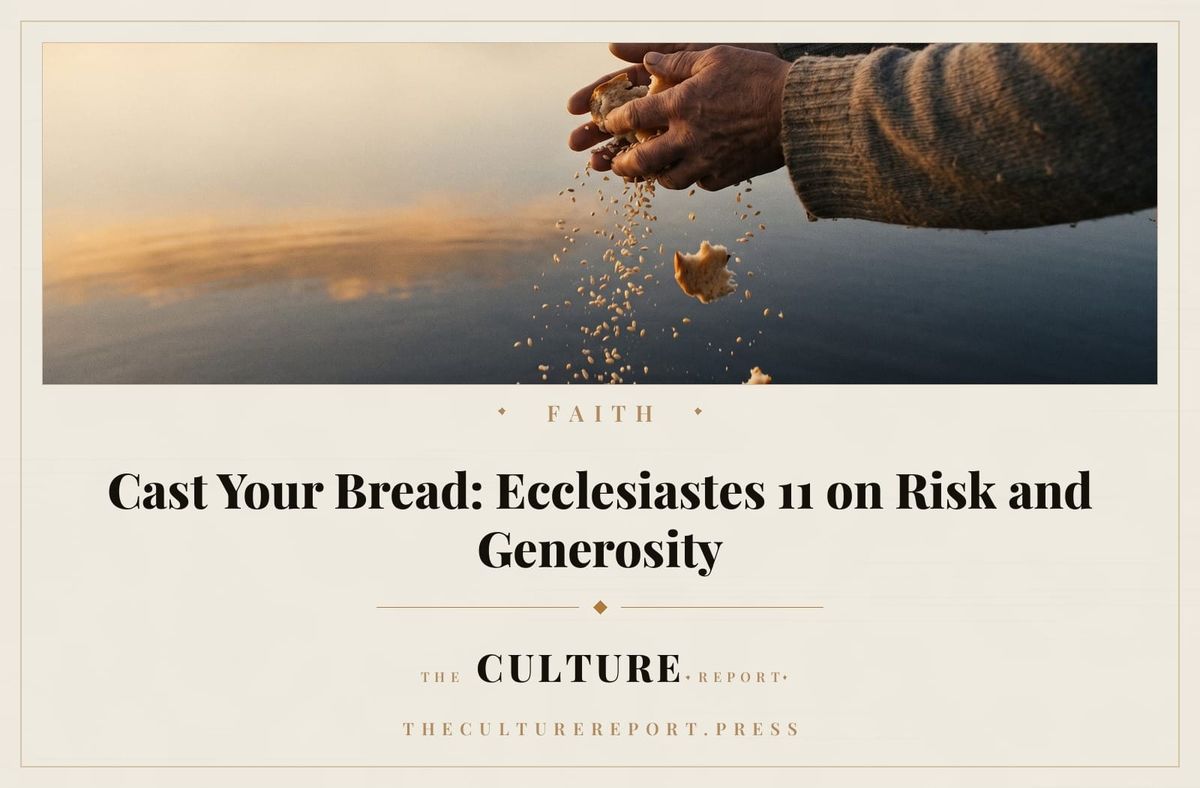
Cast Your Bread: What Ecclesiastes 11 Taught Me About Risk, Patience and Generosity
Solomon said to give a portion to seven, or even to eight. After years spent across business, property, shares and charitable work, I have come to read that as one of the most practical instructions in Scripture — and one of the most demanding.
One of the most useful pieces of wisdom I have found anywhere comes from Ecclesiastes 11:
"Cast your bread upon the waters, for after many days you will find it again. Give a portion to seven, or even to eight, for you do not know what disaster may happen on earth."
— Ecclesiastes 11:1–2
For years I had been living out something of this principle without knowing there was a biblical framework for it.
Intuitively, I have always diversified. Over the years I have been involved in charitable entrepreneurship, business entrepreneurship, share trading, house renovations and property development. They are very different worlds, but I have never been comfortable putting everything into one basket.
At the same time, another principle has been important to me: not everything that comes into my hands is there for me to keep. There is giving. There is tithing. There is generosity. There is supporting the work of God and helping people who need a hand.
So when I came back to Ecclesiastes 11 and read it more carefully, I began to see a framework for something I had practised for years without naming it.
Give a portion to seven — or even to eight
That phrase is the one that stopped me.
There is something remarkably practical about it. Solomon is acknowledging what every blue-collar worker, business owner, farmer and parent eventually discovers: you do not know what tomorrow is going to bring.
Industries change. Companies restructure. Interest rates move. Property markets rise and fall. Investments do not always perform as expected. Businesses have good years and difficult years.
That is not pessimism. It is reality.
The biblical response is not to become fearful and bury everything you have been given. It is to become a wise steward of it.
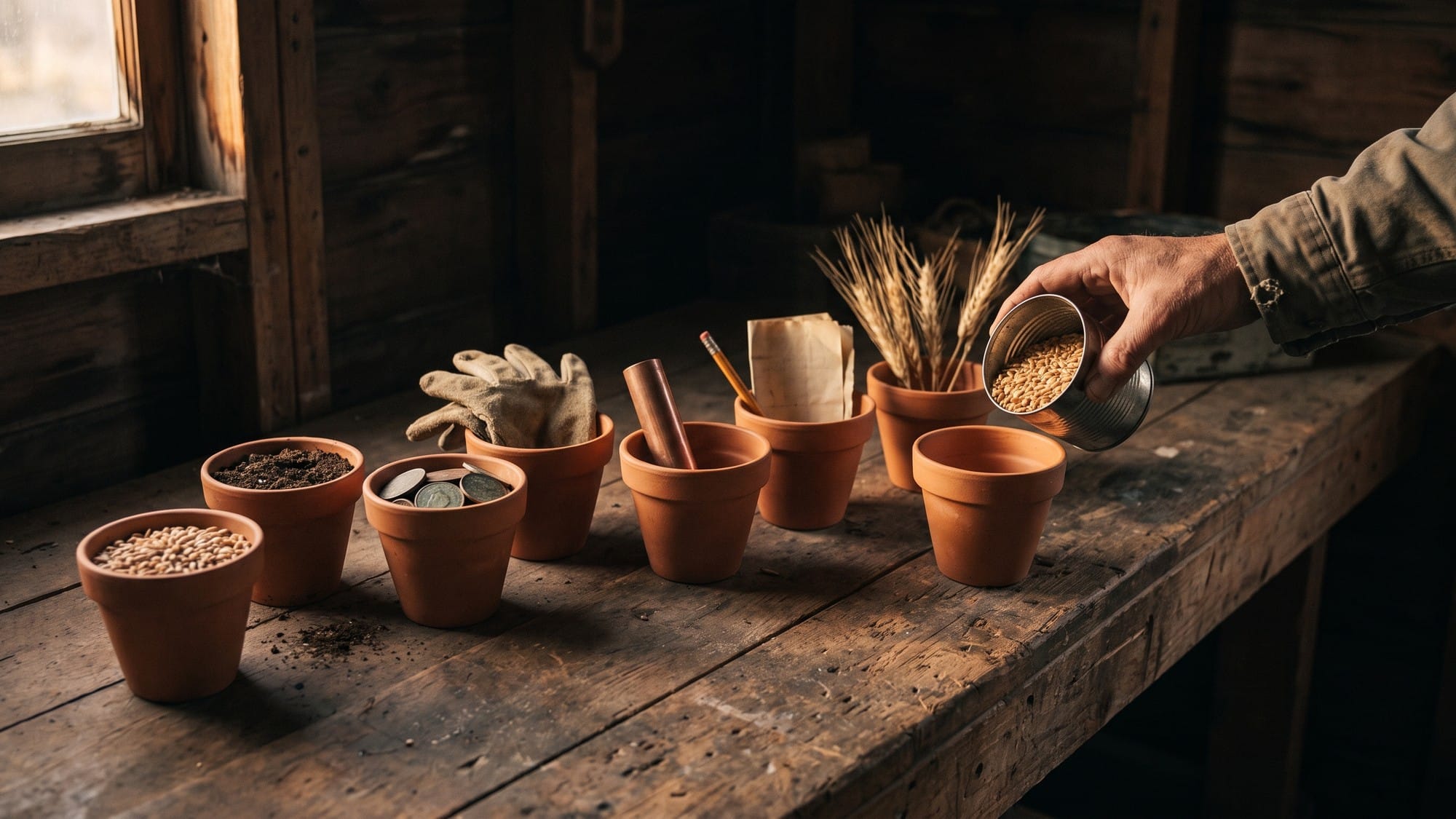
And for me, diversification has never been simply about spreading money across different investments. It is a much bigger principle. Some you save. Some you invest. Some you use to create opportunities. And some you give away.
Giving is part of stewardship
This is where tithing and charitable giving belong in the conversation.
The Bible's vision for money is bigger than accumulation. From the Old Testament principle of the tithe through to the radical generosity of the New Testament church, God's people are continually reminded that what we have ultimately comes from Him.
Giving reminds me that I am a steward, not simply an owner.
There is something powerful about taking the first portion of what you receive and saying, in effect: God, this belongs to You. For many Christians that is expressed through the discipline of tithing — giving ten per cent to the work of God. Then there is generosity beyond the tithe: supporting charities, helping people in difficulty, backing worthwhile causes and investing in organisations that are making a difference.
I have been involved in both commercial entrepreneurship and charitable entrepreneurship, and I have come to believe we need both.
One asks: how can I create value?
The other asks: how can I give value away?
A healthy life needs both questions.
Don't just clock in — build something
You do not have to be an entrepreneur for any of this to apply.
If you are a carpenter, truck driver, mechanic, electrician, cleaner, factory worker or labourer, you already have something to invest. Your "bread" might be your skills, your work ethic, your relationships, your reputation, or the money left over once the bills are paid.
Maybe you learn another skill. Maybe you get another qualification. Maybe you put $50 aside every week. Maybe you start investing. Maybe you renovate your first house. Maybe you start a small side business. Maybe you mentor the young bloke who has just started on the job.
And maybe part of every pay packet is deliberately set aside for God and for others.
That last one matters, because if we are not intentional about generosity, lifestyle has a remarkable ability to consume everything we earn. Giving first changes the way we think about everything that remains.
Cast your bread
There is another phrase in the passage I keep coming back to:
"Cast your bread upon the waters, for after many days you will find it again."
You have to release the bread before anything can happen.
There is a principle here that goes well beyond investing. Sometimes you have to let something leave your hand without controlling exactly how, or when, or whether it comes back.
That is certainly true of generosity.
When I donate to a charity, support a ministry or help somebody in need, I am not making an investment in the conventional financial sense. I am not giving someone $100 because I expect God to send me $200 next week. That is not generosity.
The return might be something I never personally receive. It might be a family helped through a crisis. A young person given an opportunity. Someone finding faith. A community strengthened. A life changed.
Some investments produce financial dividends. Others produce human dividends. Both matter.
After many days
Notice the timeframe Solomon gives us: after many days.
We live in a culture obsessed with quick returns. But much of life is about planting things whose return you cannot immediately see.
You build relationships. You develop businesses. You invest. You renovate. You help people. You tithe. You donate. You learn. You make mistakes. And you keep going.
Some things work spectacularly. Some produce modest results. Some do not work at all. And some of the seeds you plant may produce a harvest you never personally see.
That does not make them wasted seeds.
Your reputation is an investment too
For the person working a regular job, one of your greatest investments has nothing to do with the share market or the property market.
It is your name.
Every time you turn up when you said you would, you are investing. Every time you do a good job when nobody is watching, you are investing. Every time you treat a customer fairly, help a workmate, teach an apprentice or refuse to cut corners, you are investing.
And every time you choose generosity over simply accumulating more for yourself, you are shaping something else: your character.
Money does not just reveal what we can afford. It often reveals what we value.
Don't wait for perfect conditions
A few verses later, Ecclesiastes says:
"Whoever watches the wind will not plant; whoever looks at the clouds will not reap."
— Ecclesiastes 11:4
There is always a reason not to start. And, interestingly, there is always a reason not to give.
I'll start tithing when I earn more. I'll donate when the mortgage is smaller. I'll become generous once the business succeeds.
But generosity, like investing, is usually developed as a habit long before it becomes a capacity. Start somewhere.
None of which is an argument for recklessness. There is a real difference between faith and financial irresponsibility. Biblical stewardship requires wisdom, provision for the people who depend on us, and generosity. Those things are not enemies. They belong together.
A framework for life
Ecclesiastes 11 has given me language for something I had practised for most of my life without ever setting it out plainly. Written down, it looks like this:
- Cast your bread. Put something out there.
- Wait many days. Think long term.
- Give a portion to seven or eight. Diversify, because you do not know what disaster may come.
- Sow your seed in the morning and keep working until evening. Stay productive.
- Don't forget to give. Tithe. Donate. Be generous. Help someone. Support something bigger than yourself.
Because the purpose of prosperity cannot simply be to accumulate more prosperity.
Whether you are running a company or working a nine-to-five, we all have something in our hands. Money. Skills. Time. Relationships. Experience. Influence. Opportunity.
The question is not how much you have.
The question is what you are doing with what you have been given.
For me, Ecclesiastes 11 has become more than an interesting passage of Scripture. It has given me a biblical framework for something I learned the long way, through experience: don't bet everything on one outcome. Keep planting. Keep learning. Keep investing. Keep giving. Think long term. Be generous along the way. And trust God with what comes back after many days.